Apart from the actual negotiations and the side events organised by NGOs, parties and other organisations that are all restricted to accredited visitors (delegations, observers, press), #COP21 offers two spaces that are accessible to the general public. Without the dreadful events of 13 November, these spaces would have been an opportunity for Parisian school classes to visit the COP and learn about climate change. However, for security reasons, those activities were cancelled.
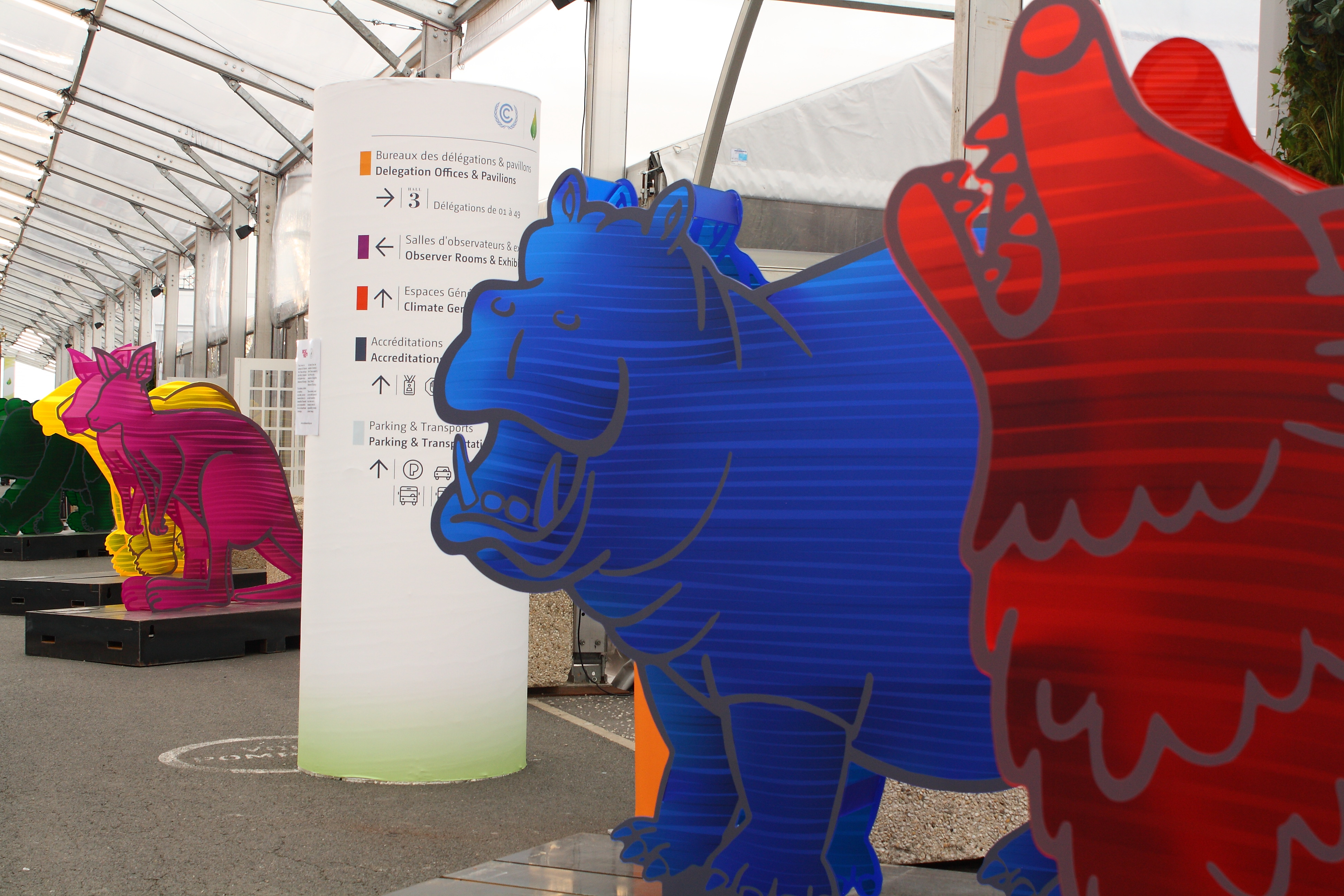
A second venue is the so-called Gallery, for which a preliminary registration is required. Here, enterprises and research institutions showcase their technological innovations that support the transformation to a low carbon or zero emission world. This ranges all the way from enhanced plastic recycling and a circular economy, over electric vehicles and solar energy to possibilities for a sustainably built environment. Unfortunately, here as well as in the actual #COP21 area, the nuclear power lobby promotes their oh-so-low-carbon energy as a solution for a zero emission economy. On a good note, we’ve seen their booths mainly empty and none of the side events focusing on the transformation from fossil to renewable energy mentioned nuclear power as a (bridge) option or even a necessity for energy security.
-Veronika Abraham

Global Change Ecology M.Sc. is devoted to understanding and analyzing the most important and consequential environmental concern of the 21st century; namely, Global Change. Problems of an entirely new and interdisciplinary nature require the establishment of innovative approaches in research and education. A special program focus is the linking of natural science perspectives on global change with approaches in social science disciplines.